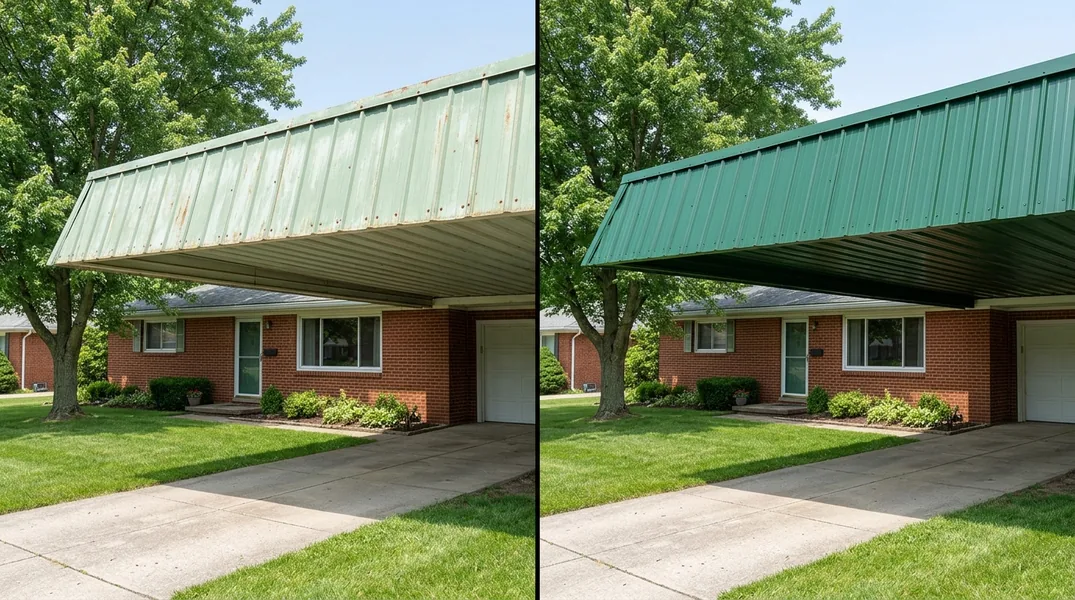
Why Cleveland Winters Are Hard on Any Roof
If you live in Cleveland, you already know that winter here is not a mild affair. Lake-effect snow can dump a foot or more on one side of town while the other side stays relatively clear, and the cycle repeats several times between November and March. That means your roof is not just dealing with cold; it is dealing with rapid, repeated loading and unloading of snow weight, followed by meltwater that refreezes overnight when temperatures drop back into the teens.
This combination is what makes freeze thaw roof damage so common in Northeast Ohio. Water sneaks into tiny gaps, expands as it turns to ice, and slowly widens those gaps in shingles, flashing, and sealant. Over a few seasons, a roof that looked fine in October can develop leaks, lifted shingles, and deteriorated valleys. Homeowners in Lakewood and Parma see the same pattern, especially on older homes with complex rooflines and mature trees that shade the roof and slow melting.
Metal Roof Snow Load: Shedding Weight Instead of Holding It
One of the biggest misconceptions about metal roof snow load is that metal roofs are slippery and therefore dangerous in winter. In reality, that slipperiness is exactly what makes them perform well under lake-effect snow. A standing seam roof with a smooth, low-friction surface allows snow to slide off in controlled amounts as it accumulates, rather than sitting on the roof and compressing into heavy ice. Asphalt shingles, by contrast, have a granular surface that grips snow and holds it in place, which is why shingle roofs often carry significantly more dead load after a big storm.
It is important to understand that metal roofs are engineered to meet the same structural load requirements as any other roof covering, and reputable installers will verify that your roof deck and framing can handle the load before recommending a Metal Roof Installation. The advantage is not that metal ignores snow; it is that metal sheds snow more predictably and resists the freeze-thaw damage that comes from meltwater refreezing in place. For a Cleveland homeowner, that translates to fewer ice-related repairs and a roof that stays watertight through repeated thaw and refreeze cycles.
Ice Dam Prevention: How Metal Roofs Reduce the Risk
Ice dams form when warm air escapes from the attic, melts snow on the upper roof, and the meltwater refreezes at the cold eaves. That ice barrier then traps water behind it, which backs up under shingles and eventually drips into ceilings and walls. Ice dam prevention starts with attic insulation and ventilation, but the roof surface matters too. Metal roofs, especially Standing Seam Metal Roofing, have fewer seams and no granular surface for water to cling to, so meltwater drains away more efficiently instead of pooling behind ice.
That does not mean metal roofs are immune to ice dams. If a home has poor attic ventilation or inadequate insulation, ice can still form at the eaves. The difference is that a properly installed metal roof, paired with good attic performance, gives meltwater a clear path to the gutters and reduces the chance of water backing up under the roof covering. Many Cleveland-area homeowners pair a metal roof with upgraded ventilation and ice-and-water shield at the eaves to further reduce risk. A free estimate is a good way to find out whether your attic and roof are set up to handle lake-effect winters.
Freeze-Thaw Cycles and Why Metal Outlasts Shingles
Freeze-thaw damage is cumulative. Every time water gets into a crack, expands, and refreezes, the crack gets a little bigger. Asphalt shingles are especially vulnerable because their granular surface and overlapping tabs create countless small places for water to enter. After several Cleveland winters, shingles can curl, crack, and lose granules, and the underlying felt can degrade. Metal roofing avoids this problem because it has no granules to lose and far fewer seams where water can penetrate.
Modern metal panels are coated with finishes designed to resist moisture, UV exposure, and temperature swings, and they expand and contract as a unit rather than cracking at stress points. That does not mean a metal roof is maintenance-free, but it does mean the material itself is not slowly breaking down from freeze-thaw the way shingles do. If your current roof is nearing the end of its life, a Metal Roof Replacement can be a long-term solution rather than another 15-to-20-year patch. Homeowners in Euclid and across the region often choose metal specifically because they are tired of replacing shingles every couple of decades.
Metal Roof Installation Near Me: What Cleveland Homeowners Should Ask
If you are searching for metal roof installation near me in the Cleveland area, the questions you ask a contractor matter more than the brand name on the panel. Start with snow load and attachment: ask how the installer verifies your roof structure and how panels are fastened to handle lake-effect snow and wind. Next, ask about ice-and-water shield, underlayment, and ventilation, because these details determine how well any roof handles freeze-thaw. Finally, ask about panel type and finish, since standing seam and exposed-fastener panels behave differently in snow-shedding and maintenance.
It is also worth asking whether a Metal Roof Over Shingles (Retrofit) makes sense for your home. In some cases, a retrofit can save on tear-off costs, but it depends on the condition of the existing roof and local code requirements. A reputable contractor will walk you through the tradeoffs rather than pushing one option. Cleveland Metal Roofing serves homeowners throughout the area and can answer these questions in person. Call (216) 294-3900 or request a free estimate to get started.
Metal Roof Cost in Cleveland: What to Budget for Winter Performance
Homeowners often ask whether metal roofing is worth the upfront pricing compared with asphalt shingles. In Cleveland, the answer usually comes down to how long you plan to stay and how much you value avoiding repeated winter repairs. Metal roofs typically cost more per square installed than shingles, but they last significantly longer and are less likely to need ice-dam-related repairs. When you factor in the cost of patching shingles, replacing flashing, and repairing water damage over 30 or 40 years, metal often closes the gap.
Budget also depends on panel type, roof complexity, and whether you need a full tear-off or can use a retrofit. A simple gable roof with standing seam will price differently than a complex roof with dormers and valleys. The best way to get an accurate number is to have your roof evaluated in person. Cleveland Metal Roofing can provide a clear, itemized quote for your home, explain how the roof will handle lake-effect snow and freeze-thaw, and help you compare options. Reach out at (216) 294-3900 or visit the website to schedule your free estimate.
Looking for a professional metal roofing contractor in Cleveland? Cleveland Metal Roofing responds fast for all your metal roofing needs.
Get a Free QuoteOur services: Metal Roof Installation · Standing Seam Metal Roofing · Metal Roof Replacement